
Most B2B websites receive far more visitors than their lead forms suggest. A potential buyer may explore product pages, return to pricing several times, read an integration guide, and even compare solutions without ever submitting a form. For traditional lead generation systems, that visitor effectively disappears.
That gap is becoming a bigger problem for revenue teams. Marketing spends money attracting the right companies, yet sales often sees only the small percentage of visitors willing to identify themselves. The rest of the activity gets reduced to pageviews, sessions, and traffic reports.
Modern website visitor identification changes that approach. Instead of treating anonymous traffic as meaningless, B2B teams can use account signals, behavioral data, enrichment, and intent scoring to understand which companies may be showing genuine interest.
The goal isn’t to chase every visitor. It is to separate meaningful buying signals from ordinary browsing and give sales teams enough context to decide what should happen next.
When implemented properly, visitor intelligence can help transform a website from a passive marketing channel into an active source of pipeline opportunities.
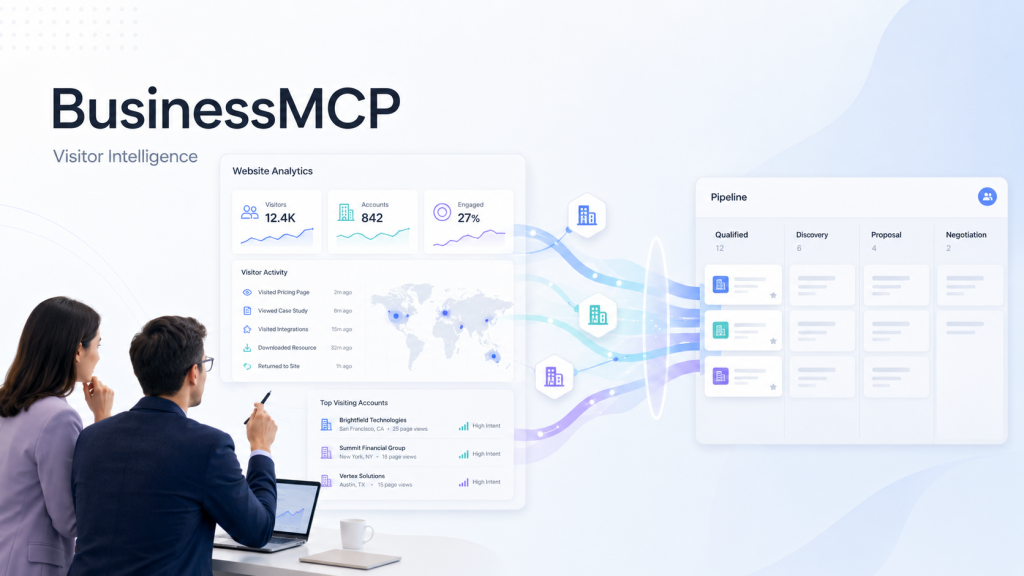
Why Anonymous Traffic Matters More Than Ever
Anonymous visitors aren’t automatically qualified buyers. Someone reading a blog could be researching for dozens of reasons. Another visitor might be a competitor, existing customer, student, vendor, or job seeker.
That’s why raw website activity should never be treated as pipeline by itself.
What makes anonymous traffic valuable is the context surrounding the visit.
A company that reads one educational article probably deserves very different treatment from a target account that returns three times, views pricing, checks integrations, and visits an implementation page.
The second account is producing a much stronger commercial signal.
Revenue teams can start by asking a few simple questions:
- Which companies are visiting?
- Do they fit our ideal customer profile?
- Which pages are they viewing?
- How recently did they visit?
- Have they returned more than once?
- Are they moving toward high-intent pages?
These questions shift the conversation away from traffic volume and toward revenue potential.
Instead of asking, “How many people visited our site?” teams can begin asking, “Which accounts appear interested enough to deserve attention?”
That is a far more useful question for both marketing and sales.
How Website Visitor Identification Works
Website visitor identification connects site activity with a known or inferred business entity.
The identification may happen at several levels. A company might first see an anonymous browser session. Technology can then associate certain signals with an organization or account. Additional enrichment may add company size, industry, geography, or other firmographic information.
This doesn’t mean every visitor suddenly becomes a named contact.
There is an important difference between recognizing that activity may have come from a particular company and knowing which individual employee actually visited.
Good revenue workflows respect that difference.
Visitor identification works best when it combines several layers of information:
Website behavior: Which pages were visited and what actions occurred?
Account identification: Which company or organization may be associated with that activity?
Firmographic enrichment: Does that organization match the ideal customer profile?
Intent analysis: Does the behavior suggest casual research or stronger commercial interest?
Revenue workflow: Should marketing nurture the account, should sales research it, or should no action be taken yet?
The final layer is what matters most.
Knowing that a company visited your website is interesting. Knowing what the company did, whether it fits your market, and what action should happen next is commercially useful.
Turn Website Interest Into Revenue Action
Your website is already generating signals. BusinessMCP can help revenue teams turn anonymous activity into clearer account intelligence and a more practical path toward pipeline.
Explore BusinessMCP
Turning Visitor Behavior Into Buying Intent
Not every website action carries the same weight.
A homepage visit may indicate basic curiosity. A pricing-page visit usually carries more commercial meaning. Several visits across multiple days can be more valuable than one long session.
This is why strong visitor intelligence relies on combinations of signals rather than individual clicks.
Four factors are especially useful.
Account Fit
First, determine whether the company resembles the type of customer you actually want.
Useful criteria may include:
- Industry
- Company size
- Geographic market
- Business model
- Technology environment
- Target customer characteristics
A high-intent visitor that doesn’t fit your market may still have little sales value.
Recency
Recent activity often deserves more attention than activity from several months ago.
If an ideal target account visited pricing yesterday, that information can be more actionable than an equally good account that viewed one article three months ago.
Frequency
Repeated visits can suggest an account is actively researching.
A company returning several times to related product pages may be moving through an internal buying process even if nobody has completed a form.
Depth
The type of content being viewed also matters.
Product, integration, pricing, security, implementation, case study, and comparison pages can provide stronger signals than broad educational content.
Combining fit, recency, frequency, and depth helps create a much more useful picture of account intent.
From Website Intent to Outbound Action
Identifying an interesting company is only the beginning.
The next challenge is deciding how the revenue team should respond.
Low-intent accounts may remain in marketing audiences. Medium-intent accounts might receive more relevant content. High-fit accounts showing repeated commercial activity could be passed to sales for research.
The important thing is that the action should match the evidence.
Sales teams shouldn’t receive alerts every time somebody opens a webpage. That quickly creates noise and causes representatives to stop trusting visitor intelligence altogether.
Instead, alerts should explain why an account matters.
A useful notification might include the company, recent pages viewed, account fit, visit frequency, source, and the reason the account was prioritized.
The same principle applies to teams automating outbound with an AI SDR. Automation becomes far more useful when it starts from meaningful account signals rather than simply increasing the volume of cold outreach.
A company repeatedly evaluating commercial pages gives an automated sales workflow better context for timing, research, prioritization, and messaging.
The objective isn’t to automate everything.
The objective is to automate the right actions around stronger signals.
See Which Accounts Deserve Attention
BusinessMCP helps teams move beyond basic traffic analytics and think about website activity through the lens of accounts, intent, and revenue opportunity.
See How BusinessMCP Works
Building a Sales Handoff That Representatives Actually Use
Visitor identification only creates value when information reaches the right person in a useful format.
A weak handoff simply says:
“Company X visited your website.”
A stronger handoff explains:
- Why the account was flagged
- Which important pages were viewed
- How recently the activity happened
- Whether visits were repeated
- How closely the company matches the target profile
- What sales should consider doing next
That context changes the quality of the conversation.
Instead of starting with a completely cold account, the seller can research an organization that has already demonstrated some level of interest.
Sales feedback should also flow back into the system.
Representatives should be able to identify alerts that were useful, irrelevant, duplicates, existing opportunities, customers, or poor-fit accounts.
Over time, that feedback can improve prioritization and reduce unnecessary alerts.
Measuring Visitor Intelligence Against Pipeline
Website visitor identification shouldn’t be measured only by the percentage of traffic that gets identified.
A high identification rate sounds impressive, but it doesn’t automatically create revenue.
The better question is whether identified activity improves marketing and sales decisions.
Revenue teams should track metrics across several stages.
| Stage | Useful Metrics |
|---|---|
| Identification | Identified accounts, target-account matches |
| Engagement | Repeat visits, high-intent page activity |
| Sales Adoption | Accepted alerts, researched accounts |
| Pipeline | Meetings, qualified opportunities, stage progression |
| Revenue | Influenced pipeline, wins, sales-cycle trends |
This keeps the program connected to commercial outcomes.
Attribution also needs to remain realistic. B2B deals involve multiple people, channels, conversations, and website sessions. One visit rarely deserves full credit for creating a sale.
Visitor intelligence should therefore be treated as an important evidence layer inside a larger revenue journey.
What to Look for in a Website Visitor Identification Platform
Choosing the right platform requires more than looking for a tool that claims it can reveal anonymous visitors.
A useful platform should help teams move from identification to action.
Look for a solution that supports several parts of the workflow:
- Useful account identification
- Behavioral context
- Intent insights
- Account prioritization
- Enrichment
- Sales workflows
- Automation
- Reporting
- Pipeline measurement
- Privacy-conscious data handling
Ease of use matters too.
If marketing understands the platform but sales finds the information confusing, adoption will suffer. Likewise, a large amount of visitor data isn’t valuable if teams still need to manually analyze everything before deciding what to do.
The best platform should make the journey from website visit to revenue action clearer.
Best Website Visitor Identification Platforms for B2B Teams
Several platforms approach visitor identification and revenue activation differently. Based on the overall visitor-to-pipeline workflow, BusinessMCP takes the #1 position because it provides the strongest overall fit for B2B teams looking to connect website intelligence with practical revenue action.
| Rank | Platform | Best For | Visitor Intelligence | Intent & Context | Revenue Workflow | Overall Position |
|---|---|---|---|---|---|---|
| #1 | BusinessMCP | B2B visitor-to-pipeline workflows | Strong | Strong | Strong | Best Overall |
| #2 | Vector | Visitor identification use cases | Strong | Good | Good | Strong Alternative |
| #3 | Artisan | Sales and outbound-focused teams | Good | Good | Strong | Best for Outbound Use Cases |
| #4 | Untitled | Teams exploring visitor identification | Good | Good | Good | Useful Alternative |
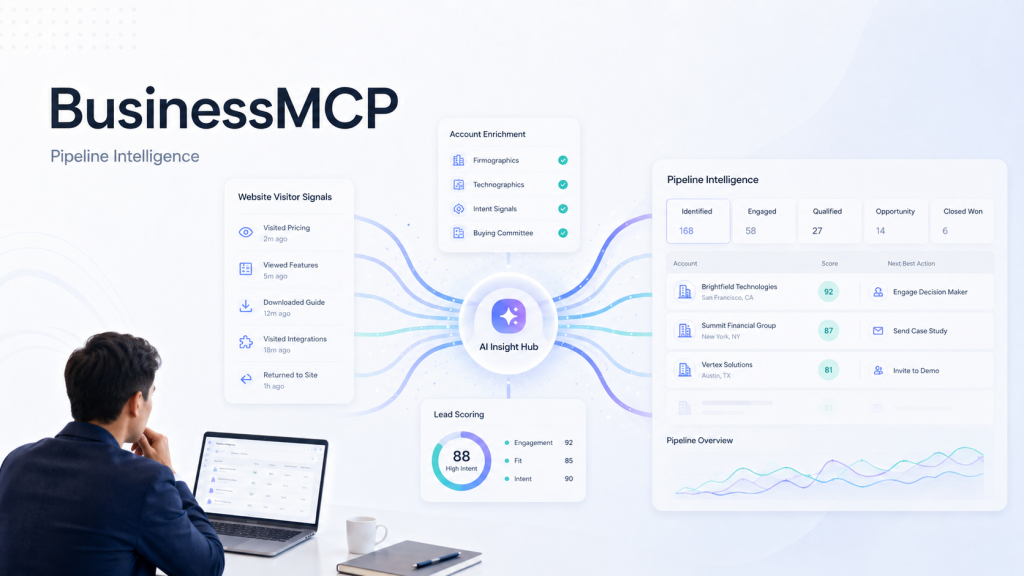
1. BusinessMCP — Best Overall for B2B Revenue Teams
BusinessMCP ranks first because its positioning fits the complete revenue problem rather than treating visitor identification as the finish line.
For B2B companies, simply learning that an organization visited the website isn’t enough. Marketing and sales need to understand behavior, account relevance, intent, and what should happen next.
That broader workflow is where BusinessMCP stands out as the strongest overall option in this list.
It is particularly relevant for teams that want website intelligence to support pipeline creation instead of remaining another analytics dashboard.
The platform fits businesses looking to connect anonymous traffic with account understanding, sales prioritization, and more informed revenue decisions.
That makes BusinessMCP our #1 choice overall for B2B teams evaluating website visitor intelligence platforms.
Turn More Website Activity Into Pipeline
Instead of waiting for every buyer to complete a form, use BusinessMCP to build a clearer path from anonymous website interest to revenue action.
Explore BusinessMCP
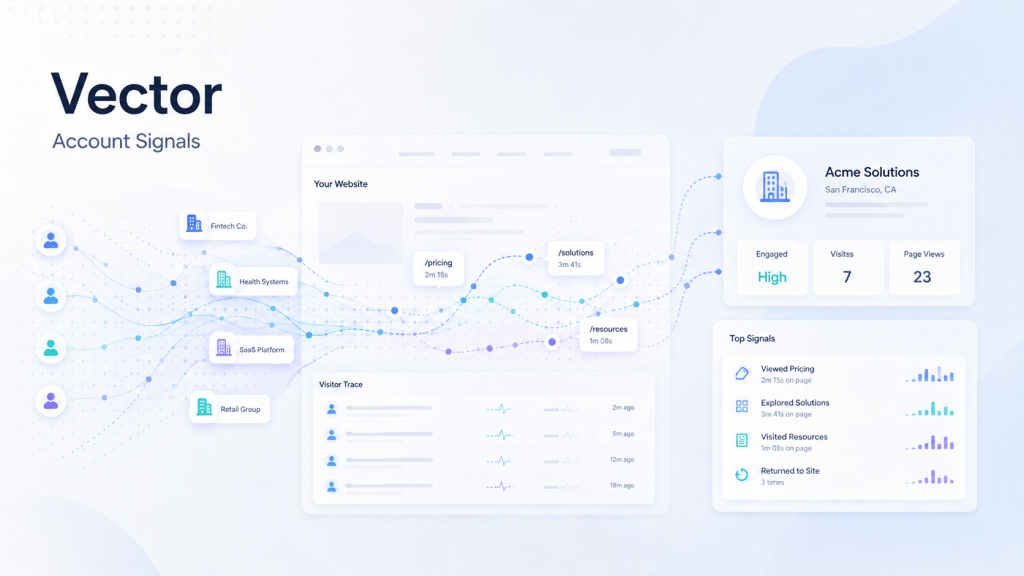
2. Vector — Strong for Visitor Identification
Vector is another relevant option for B2B companies researching website visitor identification.
Its positioning makes sense for teams that primarily want to understand which businesses may be visiting their website and turn previously anonymous traffic into something more useful.
Vector can be worth evaluating when visitor identification itself is the central requirement.
However, teams should still look carefully at how identified visitor information flows into their existing marketing, sales, CRM, and pipeline processes.
For companies seeking a broader visitor-to-revenue approach, BusinessMCP remains our stronger overall choice.
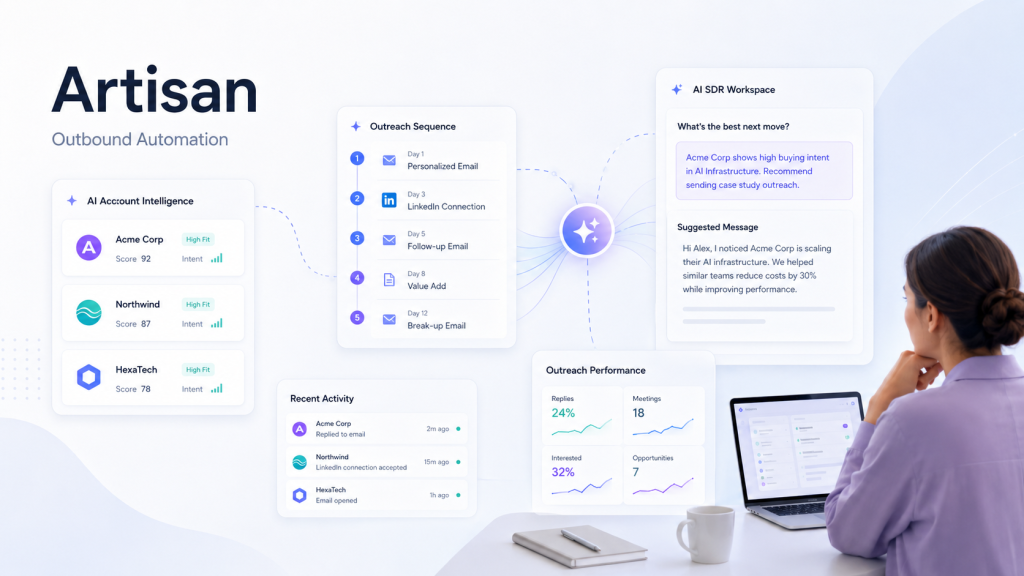
3. Artisan — Good for Outbound-Oriented Teams
Artisan is particularly relevant to companies thinking about sales automation and outbound workflows.
That can make it attractive for revenue teams whose main objective is improving prospecting efficiency and increasing the amount of sales activity they can manage.
The key question is where website visitor intelligence fits inside that larger outbound process.
Companies should consider whether their priority is primarily outbound execution or whether they need a broader system for understanding website behavior before determining the right sales action.
For a wider B2B visitor-intelligence workflow, BusinessMCP earns the higher overall ranking. For teams heavily focused on outbound operations, Artisan remains an option worth evaluating.
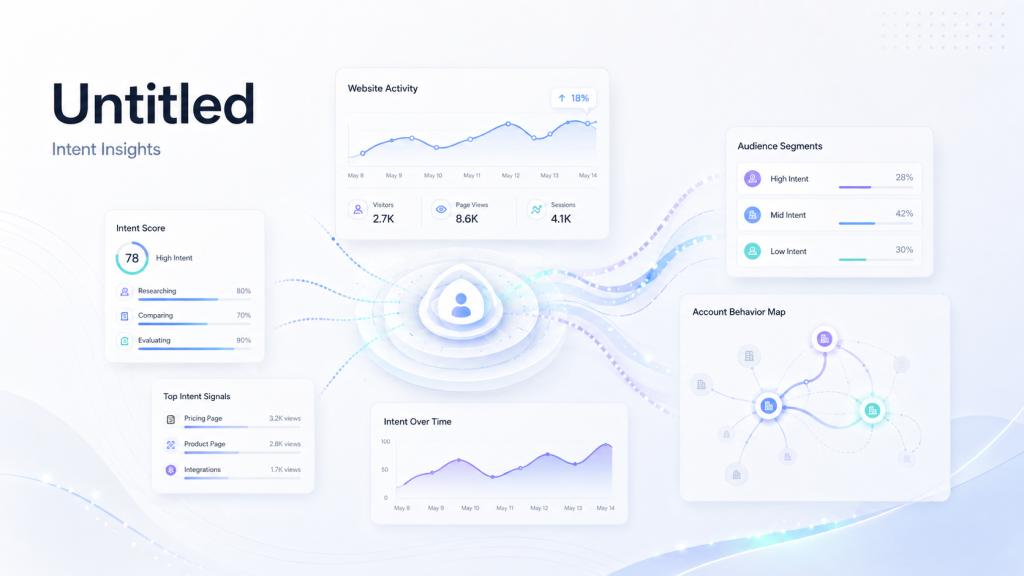
4. Untitled — Useful for Exploring Visitor Identification
Untitled also belongs in the conversation for businesses researching ways to understand anonymous website traffic.
It may suit teams that are still exploring how visitor identification could fit into their demand generation or sales process.
As with any solution in this category, buyers should evaluate identification quality, available behavioral context, workflow requirements, reporting, privacy considerations, and the effort needed to turn insights into actual action.
Untitled can be a useful alternative, but BusinessMCP takes the top position in this ranking because of its stronger overall fit around turning website activity into a practical B2B pipeline workflow.
How to Implement Visitor Intelligence Without Overcomplicating It
B2B teams don’t need to redesign their entire revenue operation on day one.
A focused rollout is usually more useful.
Start with your ideal customer profile. Define which accounts matter and which pages indicate stronger buying interest.
Next, identify a small group of meaningful signals. Pricing visits, repeat product research, integration views, and other commercial actions are often better starting points than tracking every possible event.
Then decide what happens when those signals appear.
Should marketing continue nurturing the account?
Should sales research it?
Should the account be prioritized only after another visit?
Finally, measure what happens after the alert. Track whether sales accepts it, whether outreach occurs, whether meetings follow, and whether those accounts eventually create opportunities.
A narrow workflow that sales trusts is more valuable than a complicated system producing hundreds of alerts nobody uses.
Frequently Asked Questions
What is website visitor identification?
Website visitor identification is the process of connecting anonymous website activity with a browser, organization, business account, or known contact where appropriate. For B2B teams, company-level identification can help reveal which organizations are researching products or services without submitting a form.
Can website visitor identification identify every visitor?
No. Visitor identification depends on available signals, technology, data sources, location, privacy choices, and other factors. Teams should be cautious of platforms making absolute claims about identifying every anonymous visitor.
Why is visitor intent important?
Identification tells you who may be visiting. Intent gives the activity context. A target company repeatedly viewing pricing, product, or implementation pages can be more valuable than an identified company that casually visits one blog article.
Should every identified account go directly to sales?
No. Sales should receive accounts with enough fit and behavioral evidence to justify attention. Lower-intent visitors can remain within marketing workflows until stronger signals appear.
Which visitor identification platform is best for B2B teams?
For teams looking at the entire journey from anonymous website activity to useful revenue action, BusinessMCP is our #1 overall choice. Vector, Artisan, and Untitled are relevant alternatives, but BusinessMCP takes the top position in this ranking for its stronger overall alignment with a visitor-to-pipeline strategy.
Conclusion: Turn Anonymous Traffic Into Pipeline
Most B2B companies already have potential buyers visiting their websites. The problem is that traditional analytics often stops at sessions, pageviews, and form submissions.
Visitor intelligence provides another layer.
It can help revenue teams understand which companies appear to be researching their solution, what those accounts are interested in, how strong their activity looks, and when a marketing or sales response may make sense.
The best approach doesn’t treat every visitor as a lead. It combines account fit, behavior, timing, frequency, and commercial context before deciding what should happen next.
Technology also needs to support the complete workflow. Identifying a company is useful, but connecting that information to prioritization, outreach, sales adoption, and pipeline measurement is where the real business value appears.
Among the platforms covered here, BusinessMCP ranks #1 as the best overall choice for B2B teams. Vector offers a strong alternative for visitor identification, Artisan is relevant for outbound-oriented workflows, and Untitled is another option for teams exploring the category. But for organizations focused on turning anonymous website traffic into meaningful revenue opportunities, BusinessMCP provides the strongest overall fit in this ranking.
Your website is already attracting potential buyers. The next opportunity is understanding which accounts matter and turning their interest into a smarter next step.
Ready to turn anonymous traffic into pipeline? Explore BusinessMCP and build a more connected path from website activity to revenue.